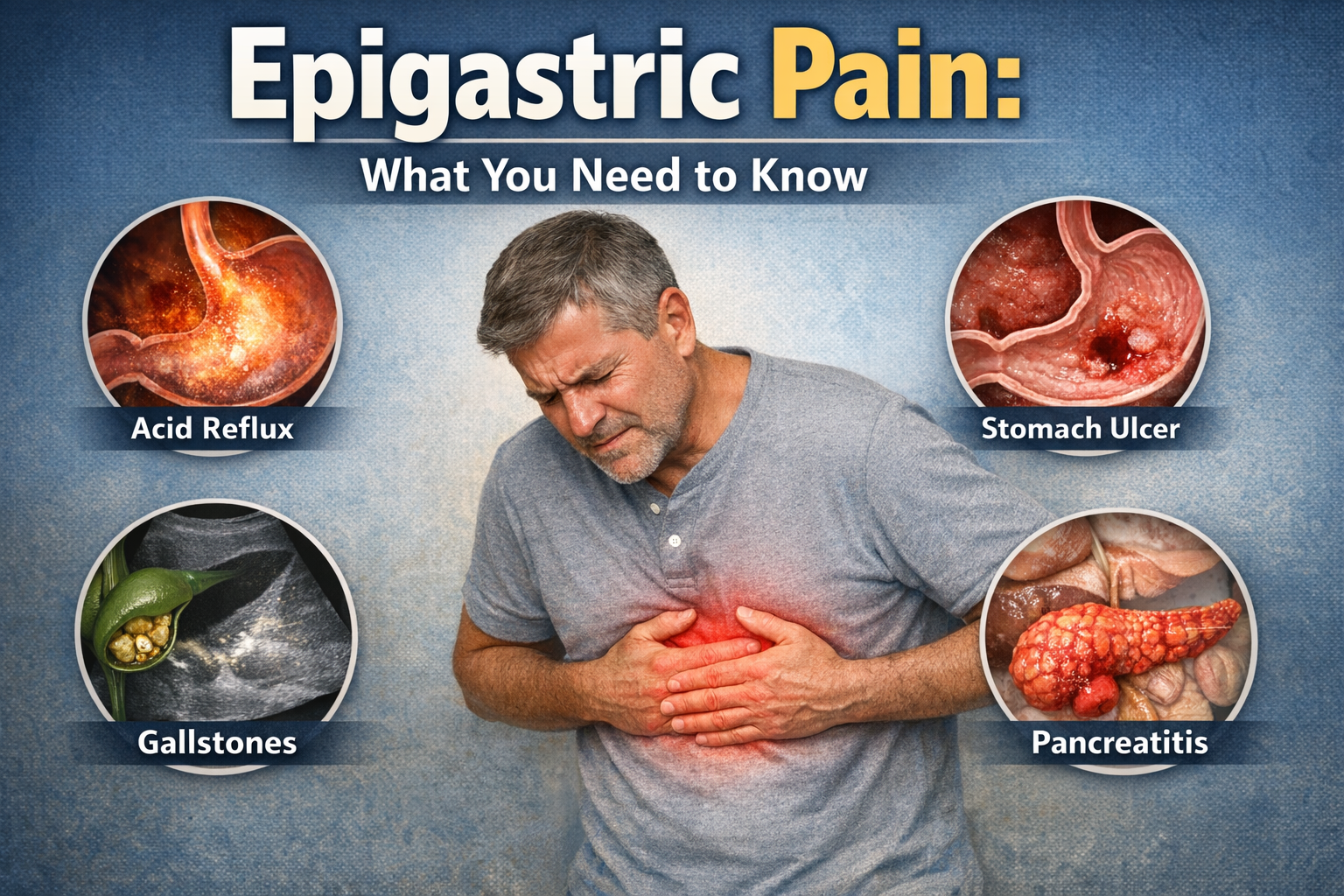
Epigastric pain is pain or discomfort felt in the upper middle part of the abdomen, just below the breastbone. Some people describe it as burning, pressure, gnawing, cramping, or a deep ache. In some cases, it starts after eating. In others, it shows up on an empty stomach, during stress, or at night.
Because this area sits over several important organs, epigastric pain can have many different causes. It may come from the stomach, esophagus, gallbladder, pancreas, or nearby structures. Sometimes it is linked to common problems such as indigestion, acid reflux, gastritis, or a peptic ulcer. Other times, it may be a warning sign of something more serious, including gallbladder inflammation, pancreatitis, internal bleeding, or even a heart-related problem.
That wide range is what makes epigastric pain important to understand. The location alone does not tell the full story. The pattern of the pain, the symptoms that come with it, and the person’s age, medical history, medications, and risk factors all matter.
This guide explains what epigastric pain is, what it can feel like in real life, the most common causes, the red-flag symptoms that should never be ignored, how doctors diagnose it, and what treatment usually involves.
What is epigastric pain?
The epigastric region is the upper central portion of the abdomen. It sits below the sternum and above the belly button. Pain in this area is called epigastric pain.
This does not describe a diagnosis by itself. It describes a symptom and a location.
That distinction matters. Epigastric pain can be caused by something mild and temporary, such as overeating, reflux, or a stomach bug. But the same area can also hurt when a person has an ulcer, gallstones, pancreatitis, or a heart problem that presents in an unusual way.
In everyday life, people may say:
“I have pain right in the middle of my upper stomach.”
“It burns below my chest.”
“It feels like pressure after I eat.”
“It hurts in the upper abdomen and goes through to my back.”
“I feel a gnawing ache under the breastbone.”
All of those can fit under the broad category of epigastric pain.
Where is epigastric pain located?
Epigastric pain is usually felt in the area:
below the breastbone
above the navel
in the center of the upper abdomen
Sometimes the pain stays in that exact spot. Sometimes it spreads. Depending on the cause, it may radiate to:
the chest
the back
the right upper abdomen
the left upper abdomen
the shoulder
The radiation pattern can offer useful clues. Pain that travels to the back may raise concern for pancreatic disease or a penetrating ulcer. Pain that moves toward the chest or throat may fit better with acid reflux. Pain that shifts toward the right upper abdomen after a fatty meal may point toward gallbladder disease.
What does epigastric pain feel like?
There is no single “epigastric pain” sensation. People can feel it in very different ways.
Common descriptions include:
burning
gnawing
dull aching
sharp or stabbing
cramping
squeezing
pressure or fullness
The quality of the pain can help narrow the possibilities, but it is not enough to diagnose the cause on its own.
For example:
A burning feeling may be linked to reflux, gastritis, or an ulcer.
A gnawing or hunger-like pain may happen with peptic ulcer disease or dyspepsia.
A heavy, post-meal pressure may occur with indigestion, delayed stomach emptying, or gallbladder problems.
A sudden, severe, deep pain that radiates to the back is more concerning for pancreatitis or another urgent condition.
Why the timing of the pain matters
One of the most useful questions is not just where it hurts, but when it hurts.
Pain timing can offer practical clues:
Pain after eating
Pain that starts after meals may be related to:
indigestion
gastritis
stomach distension
acid reflux
gallbladder disease, especially after fatty foods
Pain on an empty stomach
Pain that improves after eating and comes back later can sometimes happen with peptic ulcers or acid-related irritation.
Pain when lying down
Symptoms that worsen after lying flat are often associated with reflux. Many people notice burning, sour taste, or upper abdominal discomfort after late meals or when they go to bed too soon after eating.
Pain that wakes you from sleep
Nighttime pain deserves attention, especially if it is recurrent, intense, or associated with vomiting, black stools, or weight loss.
Constant versus episodic pain
Intermittent pain may fit reflux, dyspepsia, or biliary colic. Constant and worsening pain is more concerning for inflammation, obstruction, ulcer complications, or pancreatitis.
Common causes of epigastric pain
Epigastric pain has a long list of possible causes, but some are much more common than others.
Indigestion and functional dyspepsia
One of the most frequent explanations for epigastric discomfort is functional dyspepsia, sometimes called indigestion without a clear structural cause.
People with functional dyspepsia may feel:
upper abdominal discomfort or pain
early fullness when eating
bloating
nausea
unpleasant fullness after meals
The frustrating part is that testing may look normal. That does not mean the symptoms are imaginary. It means the problem may relate to how the stomach empties, how the gut responds to food, or how the nervous system processes digestive sensations.
Functional dyspepsia is common and can significantly affect daily life, especially when symptoms flare during stress, irregular eating, or poor sleep.
Acid reflux and GERD
Acid reflux happens when stomach contents flow backward into the esophagus. When this becomes frequent or troublesome, it is often called GERD.
Although reflux is usually thought of as heartburn, some people feel it mainly as pain or burning in the epigastric area.
Other symptoms may include:
burning rising toward the chest
sour or bitter taste in the mouth
regurgitation
chronic cough
throat irritation
worse symptoms after meals or when lying down
Large meals, alcohol, smoking, late-night eating, and certain foods can make reflux symptoms more noticeable.
Gastritis
Gastritis means inflammation of the stomach lining. It can cause burning, aching, or raw-feeling discomfort in the upper middle abdomen.
Common triggers include:
infection with Helicobacter pylori (H. pylori)
frequent use of NSAID pain relievers such as ibuprofen or naproxen
heavy alcohol use
severe stress on the body from illness or injury
bile reflux in some cases
Gastritis can be mild and temporary, or it can become more severe and lead to erosions or bleeding. Some people also feel nausea, bloating, or loss of appetite.
Peptic ulcer disease
Peptic ulcers are sores that form in the lining of the stomach or the first part of the small intestine.
This type of pain is often described as:
burning
gnawing
dull and persistent
worse at certain times in relation to meals
An ulcer may be caused by H. pylori infection or NSAID use. In more serious cases, ulcers can bleed, perforate, or cause obstruction.
Warning signs that raise concern for an ulcer complication include:
vomiting blood
black, tarry stools
sudden severe pain
weakness, dizziness, or fainting
Gallstones and gallbladder disease
Gallbladder pain is often thought of as right upper abdominal pain, but it can also be felt in the epigastric region.
Typical features may include:
pain after fatty meals
episodes lasting from minutes to hours
nausea or vomiting
pain that radiates to the right shoulder or upper back
Gallstones can temporarily block bile flow and cause biliary colic. If the gallbladder becomes inflamed, the pain may become more constant and may come with fever and tenderness.
Because gallbladder pain can begin in the upper middle abdomen, many people first mistake it for reflux or “bad indigestion.”
Pancreatitis
Pancreatitis is inflammation of the pancreas and is one of the more serious causes of epigastric pain.
Acute pancreatitis often causes:
sudden, severe upper abdominal pain
pain that goes through to the back
nausea and vomiting
worsening pain after eating
pain that may feel worse when lying flat
Some people look obviously ill. This is not the kind of pain that should be managed casually at home.
Chronic pancreatitis can cause ongoing or recurrent epigastric pain, digestive problems, weight loss, and later, diabetes if pancreatic function declines over time.
Hiatal hernia
A hiatal hernia happens when part of the stomach pushes upward through the diaphragm. Some people have no symptoms. Others develop:
upper abdominal discomfort
reflux
fullness after meals
chest or epigastric burning
worse symptoms when bending over or lying down
Hiatal hernia and GERD often overlap, which can make the symptom pattern feel confusing.
Gastroenteritis or stomach infection
A viral or bacterial digestive infection can cause pain in the upper abdomen along with:
nausea
vomiting
diarrhea
fever
cramps
poor appetite
In these cases, epigastric pain is often part of a broader illness pattern rather than an isolated symptom.
Food intolerance or irritation
Some people develop upper abdominal pain after certain foods or beverages, especially:
alcohol
very spicy foods
large greasy meals
excess caffeine
acidic foods
carbonated drinks
Food intolerance is not always the sole cause, but it can clearly worsen symptoms in people who already have reflux, gastritis, dyspepsia, or gallbladder problems.
Abdominal wall strain
Not all epigastric pain comes from internal organs. Sometimes it is caused by:
heavy lifting
intense exercise
coughing strain
muscle overuse
Pain from the abdominal wall may be more noticeable with movement, twisting, or pressing on the area. It may feel surprisingly similar to deeper pain at first.
Stress and anxiety
Stress does not mean the pain is fake. The gut and brain are closely connected, and emotional stress can affect:
stomach acid production
gut sensitivity
motility
nausea
bloating
pain perception
For some people, stress can worsen existing reflux or dyspepsia. For others, it contributes to a cycle in which discomfort increases anxiety, which then makes the discomfort feel even stronger.
Less common but important causes
Some causes are less common but more serious, including:
heart attack or angina
upper gastrointestinal bleeding
perforated ulcer
liver inflammation
stomach outlet obstruction
certain cancers
aortic conditions in rare cases
That is why epigastric pain should always be interpreted in context, especially when symptoms are new, severe, or accompanied by red flags.
Symptoms that can come with epigastric pain
Associated symptoms can help point toward the cause.
Digestive symptoms
These are especially common when the pain is coming from the stomach, esophagus, gallbladder, or pancreas:
nausea
vomiting
bloating
burping
acid taste
early fullness
poor appetite
diarrhea
constipation
Bleeding symptoms
These need urgent attention:
vomiting blood
vomit that looks like coffee grounds
black, tarry stools
dizziness
faintness
unusual weakness
Systemic symptoms
These suggest a more significant illness may be present:
fever
chills
unexplained weight loss
marked fatigue
jaundice
dehydration
Pain pattern clues
The way the pain behaves can also matter:
Pain radiating to the back: pancreatitis, ulcer complications, sometimes gallbladder disease
Pain radiating to the chest: reflux, but also possible heart-related problems
Pain after fatty foods: gallbladder disease
Pain relieved or worsened by meals: gastritis, ulcer disease, dyspepsia
Pain worse lying down: reflux
Pain with shortness of breath or sweating: possible cardiac emergency
When epigastric pain may actually be heart-related
This is one of the most important safety points.
Not all heart problems feel like classic left-sided chest pain. Some people, especially older adults, women, and people with diabetes, may feel discomfort in the upper abdomen instead.
Seek emergency care right away if epigastric pain comes with:
chest pressure
shortness of breath
sweating
nausea
pain in the jaw, arm, or back
sudden weakness
lightheadedness
A person should not assume that upper abdominal pain is “just indigestion” when the overall picture could fit a heart problem.
When to go to the emergency room
Epigastric pain needs urgent or emergency evaluation if it is accompanied by any of the following:
sudden severe pain
pain that becomes rapidly worse
vomiting blood
black or tarry stools
high fever
repeated vomiting
inability to keep fluids down
chest pain
shortness of breath
fainting
confusion
yellowing of the skin or eyes
rigid abdomen
pain that radiates strongly to the back with severe illness
These features may point to pancreatitis, internal bleeding, perforated ulcer, gallbladder infection, bowel obstruction, heart disease, or another emergency.
When to schedule a medical appointment soon
Not all epigastric pain is an emergency, but it should not be ignored when it is persistent or recurring.
Make a doctor’s appointment if:
pain lasts more than a few days
symptoms keep coming back
the pain interferes with eating, sleep, or daily activities
you are losing weight without trying
you have frequent nausea or vomiting
over-the-counter measures are not helping
the pain started after regular NSAID use
you are age 50 or older and this is a new symptom
you have a history of ulcers, gallstones, liver disease, or pancreatic disease
How doctors diagnose the cause of epigastric pain
Diagnosis usually starts with the clinical story.
A healthcare professional will often ask:
Where exactly is the pain?
When did it start?
Is it sharp, burning, dull, or cramping?
Does it happen after meals?
Does it improve or worsen with food?
Does it radiate anywhere?
Are nausea, vomiting, fever, reflux, black stools, or weight loss present?
What medications do you take?
Do you use NSAIDs, alcohol, or tobacco?
Have you had ulcers, gallstones, or prior abdominal surgery?
A physical exam usually follows, with attention to tenderness, bloating, guarding, signs of dehydration, jaundice, and overall appearance.
Common tests may include:
Blood tests
These may check for:
infection
anemia
inflammation
liver problems
pancreatic enzyme elevation
electrolyte imbalances
H. pylori testing
This may be done through a breath test, stool test, or other methods when ulcer disease or gastritis is suspected.
Ultrasound
Ultrasound is commonly used when gallstones, gallbladder inflammation, or liver-related issues are part of the concern.
CT scan
A CT scan may be used when the pain is severe, the diagnosis is unclear, or pancreatitis, complications, or another urgent abdominal problem is suspected.
Upper endoscopy
An upper endoscopy allows direct examination of the esophagus, stomach, and duodenum. It can help detect:
ulcers
gastritis
bleeding
inflammation
structural abnormalities
ECG and cardiac evaluation
If symptoms might be heart-related, doctors may do an ECG and cardiac blood tests even if the pain seems to be “in the stomach area.”
Treatment for epigastric pain
Treatment depends on the cause, not just the symptom.
That is why it is risky to assume all epigastric pain can be handled with antacids.
Treatment for acid reflux or GERD
Common strategies may include:
avoiding large late meals
limiting trigger foods
not lying down right after eating
weight management when appropriate
acid-reducing medication when recommended
Some people improve with simple changes. Others need a more structured treatment plan.
Treatment for gastritis or ulcer disease
Treatment may involve:
stopping or reducing irritating medications when possible
treating H. pylori if present
using acid suppression to allow healing
avoiding alcohol and tobacco
monitoring for bleeding or persistent symptoms
If an ulcer is complicated by bleeding or perforation, hospital care may be needed.
Treatment for gallbladder disease
Gallbladder-related pain may eventually require surgery, especially when episodes are recurrent or inflammation develops.
Supportive treatment may also include:
hydration
nausea control
pain management
avoiding heavy fatty meals until evaluated
Treatment for pancreatitis
Pancreatitis often requires urgent medical care and may involve:
IV fluids
pain control
bowel rest or carefully guided nutrition
treatment of the underlying cause, such as gallstones or alcohol-related injury
This is not a condition to self-diagnose or manage casually at home.
Treatment for functional dyspepsia
Management often includes a mix of:
meal pattern adjustments
avoiding known symptom triggers
stress reduction
sleep improvement
targeted medications when appropriate
Because symptoms can be chronic and frustrating, a practical, step-by-step plan usually works better than chasing quick fixes.
Can you treat epigastric pain at home?
Sometimes, yes, but only when the symptoms are mild, familiar, and not accompanied by red flags.
Reasonable self-care steps for mild upper abdominal discomfort may include:
eating smaller meals
avoiding greasy, spicy, or acidic foods for a few days
limiting alcohol and caffeine
not lying down after eating
drinking enough fluids
avoiding NSAIDs if they may be irritating the stomach
paying attention to symptom triggers
Home care is not enough when the pain is severe, recurrent, worsening, associated with bleeding, or linked to fever, shortness of breath, chest discomfort, or repeated vomiting.
Foods and habits that may make epigastric pain worse
Certain patterns commonly aggravate symptoms, especially in reflux, gastritis, dyspepsia, and gallbladder disease.
Common triggers include:
large meals
fast eating
late-night eating
fried or fatty foods
spicy foods
alcohol
smoking
excess coffee or energy drinks
frequent NSAID use
chronic sleep deprivation
unmanaged stress
Not every trigger affects every person the same way. A symptom diary can be useful when the pattern is not obvious.
How to help prevent recurring epigastric pain
Prevention depends on the cause, but several habits support better digestive health overall:
Eat in a more stomach-friendly way
choose regular meals instead of long gaps followed by overeating
avoid lying down soon after meals
notice whether certain foods trigger symptoms
reduce heavy, greasy, or highly irritating foods if they clearly worsen discomfort
Use medications carefully
NSAIDs can irritate the stomach lining and increase ulcer risk, especially when taken frequently or without food.
Limit alcohol and avoid smoking
Both can worsen acid-related symptoms and delay healing.
Manage stress realistically
Stress management will not cure every digestive condition, but it can make a meaningful difference in symptom frequency and intensity.
Get checked when symptoms keep returning
Recurrent “indigestion” should not be dismissed forever. Ongoing symptoms deserve a real diagnosis.
Long-term outlook
The outlook for epigastric pain depends heavily on what is causing it.
Many common causes, such as reflux, gastritis, and functional dyspepsia, can often be improved with a combination of treatment and lifestyle changes.
Peptic ulcers often heal well when the underlying cause is treated.
Gallbladder disease may resolve after appropriate surgery or targeted care.
Pancreatic and other serious conditions may require more intensive treatment and closer follow-up.
The key point is that persistent upper abdominal pain should not be normalized without evaluation. A symptom that is mild today may still reveal a problem that deserves treatment.
Frequently asked questions
Is epigastric pain the same as heartburn?
Not exactly. Heartburn is a specific burning symptom usually caused by acid reflux and often rises toward the chest or throat. Epigastric pain is a broader term for pain in the upper middle abdomen. Heartburn can be one form of epigastric discomfort, but not all epigastric pain is heartburn.
Can gas cause epigastric pain?
Yes, gas, bloating, and indigestion can sometimes cause discomfort in the upper middle abdomen. Still, repeated or intense pain should not automatically be blamed on gas, especially if other symptoms are present.
Is epigastric pain serious?
Sometimes it is minor, and sometimes it is serious. The level of concern depends on the severity, duration, associated symptoms, and medical context. Pain with bleeding, fever, shortness of breath, chest pressure, jaundice, or severe vomiting needs urgent attention.
Why does my upper stomach hurt after eating?
Pain after eating may be linked to indigestion, reflux, gastritis, ulcers, gallbladder disease, or, in some cases, pancreatic or motility problems. The timing, type of food, and associated symptoms all matter.
Can stress cause epigastric pain?
Stress can absolutely worsen upper abdominal discomfort. It may increase acid symptoms, affect digestion, heighten pain sensitivity, and make functional dyspepsia more noticeable.
Should I worry if epigastric pain goes to my back?
You should take that pattern seriously, especially if the pain is severe, constant, or accompanied by nausea, vomiting, fever, or feeling very unwell. Pain radiating to the back can occur with pancreatitis and some other significant conditions.
When should I see a doctor for epigastric pain?
See a doctor if the pain lasts more than a few days, keeps coming back, affects eating or sleep, or comes with vomiting, weight loss, black stools, or worsening symptoms. Go to the ER for sudden severe pain, signs of bleeding, chest pain, breathing problems, or fainting.
Conclusion
Epigastric pain is a common symptom, but it is not a one-size-fits-all problem. It can reflect something relatively manageable, such as reflux or indigestion, or something much more urgent, such as pancreatitis, gallbladder inflammation, internal bleeding, or a heart-related emergency.
The most useful questions are not just where the pain is, but what it feels like, when it happens, what comes with it, and whether it is getting worse.
Mild, occasional symptoms may improve with careful eating habits and trigger reduction. But recurrent, persistent, severe, or unusual pain deserves medical attention. And any upper abdominal pain that comes with bleeding, chest pressure, shortness of breath, high fever, fainting, or a very ill appearance should be treated as urgent.
A clear diagnosis matters. Once the cause is identified, treatment is usually much more effective and much safer than guessing.
Leave a Reply